
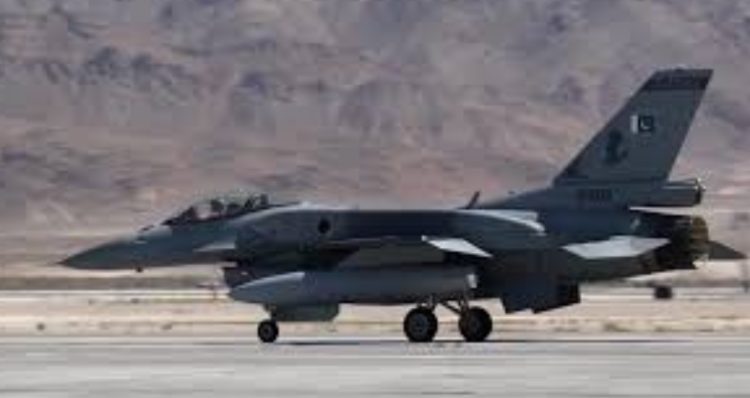
US Approves $686 Million F-16 Upgrade for Pakistan: Impact on India and Regional Security
Dubai | December 12, 2025 | 1 | India , newsThe United States has approved a major $686 million upgrade package for Pakistan’s F-16 fighter jets, a decision that comes at a sensitive time for South Asia. The move follows recent pressure on India to expand its military purchases from the US, along with rising tensions after the brief India-Pakistan conflict earlier this year.
This explainer breaks down the deal, why it matters now, and how it affects the strategic balance in the region.
What Has the US Approved for Pakistan?
According to defence analysts, the latest approval is part of a broader US-Pakistan F-16 support programme that began in 2022 to help Pakistan maintain its fleet.
The new package includes:
-
Advanced hardware and software upgrades
-
Enhanced flight and electronic systems
-
Upgraded Identification Friend or Foe (IFF) system
-
New navigation systems
-
Repair and spare parts support
Additionally, the US has authorised:
-
92 Link-16 communication systems
-
Six Mk-82 inert bomb bodies for training purposes
-
Major Defence Equipment (MDE) worth $37 million
The Link-16 system is especially important because it provides secure, real-time data sharing between aircraft, ground forces, and naval units — a big leap forward for Pakistan’s situational awareness.
Pakistan currently operates around 70–80 F-16s, including older Block 15 models, upgraded variants, ex-Jordanian aircraft, and newer Block 52+ jets.
What Makes the F-16 So Important?
The F-16 Fighting Falcon, also known as the Viper, is one of the world’s most widely used multirole fighter jets. Designed for air-to-air combat and ground-attack missions, the F-16 is in service in over 29 countries, including Pakistan, the US, Turkey, Egypt, Israel, Taiwan, Greece, Poland, Indonesia, Denmark, and others.
Manufactured by Lockheed Martin, the F-16 is known for its:
-
High maneuverability
-
Advanced avionics
-
Proven combat record
-
Versatility in modern warfare
How Did F-16s Feature in the May India-Pakistan Conflict?
Tensions escalated in May after an attack in the Pahalgam region of Indian-administered Kashmir on April 22, where 26 people were killed. India blamed Pakistan-based groups — a claim Pakistan denied.
What followed was a five-day aerial confrontation:
-
India launched missile strikes on nine locations across Pakistan and Pakistan-administered Kashmir.
-
Pakistan responded with 42 high-tech aircraft, including F-16s, JF-17s, and J-10s.
-
Both countries used missiles, drones, and precision weapons.
A US-brokered ceasefire, credited by President Donald Trump, ended the hostilities on May 10.
Is the US Pressuring India?
According to experts, yes — partially.
Why the Pressure?
-
India recently slowed down planned purchases of US weapons and aircraft.
-
President Trump imposed an extra 25% tariff on Indian imports in August, raising total tariffs to 50%.
-
The US sees India’s purchase of discounted Russian oil as problematic due to ongoing pressure on Russia.
These developments have strained US-India ties.
However, analysts say the F-16 upgrade is not purely about India. It is also part of a long-term US strategy to keep Pakistan engaged in counterterrorism cooperation and maintain influence in the region.
The US has already clarified that the deal will not change the military balance in South Asia, a message clearly aimed at New Delhi.
What Does Pakistan Gain From This Deal?
According to experts, Pakistan benefits in three major ways:
1. Stronger Air Power Until 2040
The upgrades will help Pakistan keep its F-16 fleet operational and competitive for the next 15 years.
2. Boost to US-Pakistan Defence Ties
The package shows that the US still values counterterrorism collaboration with Pakistan, even as China remains Pakistan’s largest defence supplier.
3. Enhanced Combat Readiness
With systems like Link-16, Pakistan can improve:
-
Real-time battlefield communication
-
Missile engagement capability
-
Pilot situational awareness
Still, analysts stress that China remains Pakistan’s primary defence partner, providing over 80% of its weapons since 2020, including the J-10C jets used during the May conflict.
Why This Deal Matters Now
This deal is significant because it comes at a moment when:
-
India-US relations are facing trade and diplomatic friction
-
Pakistan is balancing ties between Washington and Beijing
-
Regional security tensions remain high
-
US wants to maintain influence in South Asia despite China’s growing presence
For Pakistan, the F-16 upgrade means stronger air defence and long-term fleet sustainability. For India, it raises concerns about US-Pakistan military cooperation, even though Washington insists the regional balance remains unchanged.
Conclusion
The $686 million F-16 upgrade package is more than just a defence deal — it reflects the evolving power dynamics in South Asia, US strategic calculations, and the balancing act both India and Pakistan perform between global powers.
With India adjusting its US partnership and Pakistan deepening ties with both Washington and Beijing, the coming years will be critical in shaping the region’s military and diplomatic landscape.
Related Posts

India’s New AI IT Rules 2026:…
Dubai | February 20, 2026 | 0India’s government has officially enforced new IT rules for AI-generated content starting today. These updated regulations fall under the Information Technology (Intermediary Guidelines and Digital Media Ethics Code) Rules, 2021,…

USD 3bn HPCL–Abu Dhabi LNG Deal…
Dubai | February 10, 2026 | 0Major India–UAE Energy Deal Strengthens Long-Term LNG Supply Leading law firms Shardul Amarchand Mangaldas & Co (SAM) and Holman Fenwick Willan (HFW) have advised on a USD 3 billion long-term…